

"I felt lost, confused, and afraid."
That is how Oliver described himself on the first day of a retreat. Four days later, he said his heart felt "a calmness, a clarity, a sensation of having my feet on the ground and knowing who I am and what I stand for."
What happens in between is what this article is about.
If you are reading this, some part of you is curious and some part of you is suspicious. Both are welcome. Most men who come to a retreat spent months researching first, wondering what actually goes on, whether it's for men like them, and if they even need it. I have guided men's retreats for nine years. Here is a straight answer.
The short version: a men's retreat is a handful of days where a small group of men step out of their normal lives, usually somewhere in nature. The days combine group work with embodied practices: breathwork, movement, cold water, ceremony and time outdoors. The purpose: a place where men can get honest about what is actually going on, at work, at home, and inside themselves, let go of what they've been carrying, and find their next steps forward.
That is the practical side of a men's retreat. What they are, why they work, and why men keep coming back takes a little more background. (Yes, I have men who have been back three times.)
Most men arrive completely full. The journey to get here, the extra work squeezed in so they could take the days off, the challenges waiting at home, the never-ending to-do list.
Most men have learned that how they feel and what they want is not welcome. Being guarded is the norm. And no man drops his guard just because he has arrived at a retreat with other like-minded men.
Here, the men co-create a space where they feel safe enough to share and bring all of themselves in. One of the first things we do at every retreat is make our shared agreements. Brought in one by one from each of the participants, agreed together, and written up where each man can see them. Here are some of the agreements the men came up with at our last retreat:

Those agreements are what allow a man to feel safe enough to drop in, share the things he's been carrying for decades, and find his authentic self.
Then we sit down together for the first time, the whole group in one circle. Each man says why he is here, as honestly as he can manage that night. Some men say two sentences. Some share something they have carried for twenty years. Nobody is forced to share.
Patryk, who has come twice, told me afterwards that the first night's openings set the tone for everything that followed. When one man goes first, he gives every other man in the room permission. Most men have been waiting years for permission without knowing it.
Samer, there for the first time, described the circle like this: "All the personal, intimate, ugly, burning feelings were just laid down on the floor, and everybody was supported. This intensity of men together is something I've never experienced before, and now I understand what it's all about."
Talking has its place, but most men have already talked, or thought, through their problems for years. And it has not yet solved them. Einstein reportedly called doing the same thing over and over while expecting different results the definition of insanity. So the heart of a retreat is practices that access the root of your problems, not the story about them.
At The Return of Men, the retreat I lead in Portugal, there are several practices that allow a man to feel what he has buried for years:
Breathwork and meditation. Simple, guided, and often the first time a man drops out of his head and into his body in years.
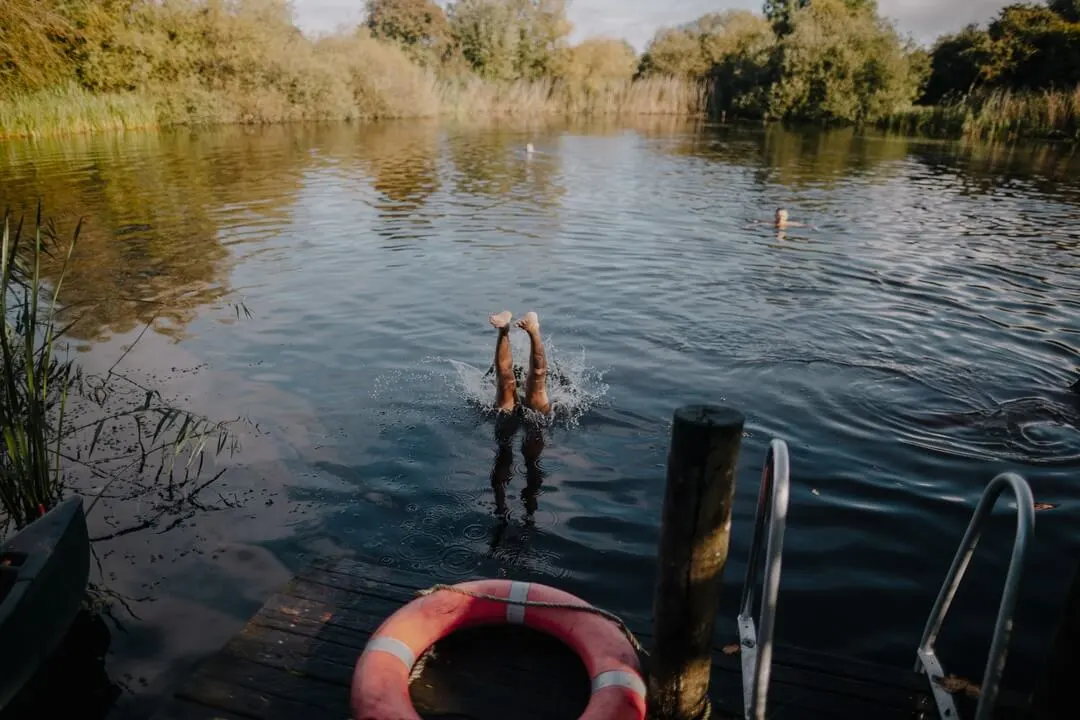
Cold water. An ice plunge is not about toughness. It is a practice in staying present while everything in you wants to leave.
Ritual combat. Structured, consented physical challenge between men, with clear rules and a facilitator holding it. Not violence, and not a fight club. A way of meeting your own strength and your own edges with another man, and one of the practices men most often name afterwards as the one that changed something. As Patryk put it: "I really enjoyed the challenging parts such as ritual combat, and the physicality and somatic practices really resonate with me, and that's also one of the reasons why I go back."
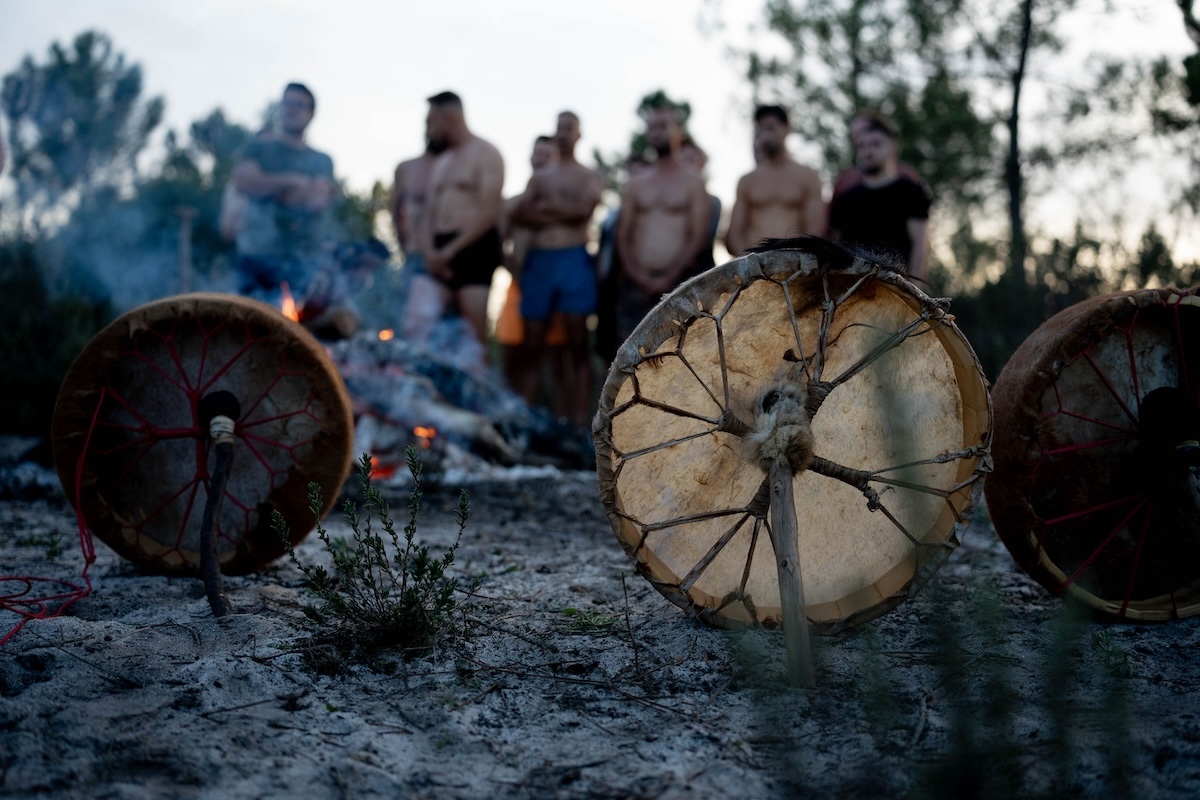
Ceremony. A fire, a sweat lodge, a moment that marks what a man is ready to leave behind. Ceremony tells your system that you have stepped outside normal time, and that this time it can be different. This may sound strange until you are in a ceremony for the first time. Then you'll experience a kind of presence you may have only felt a few times in your life.
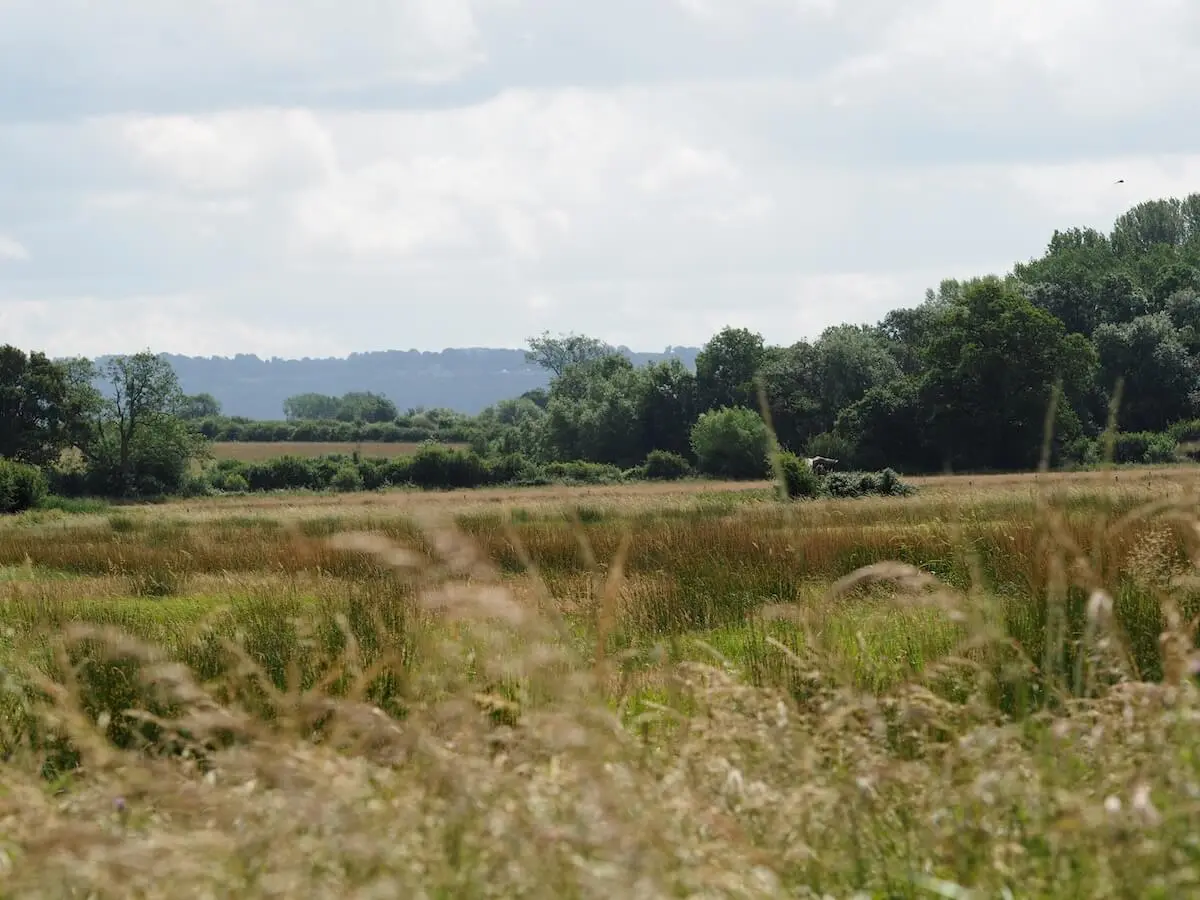
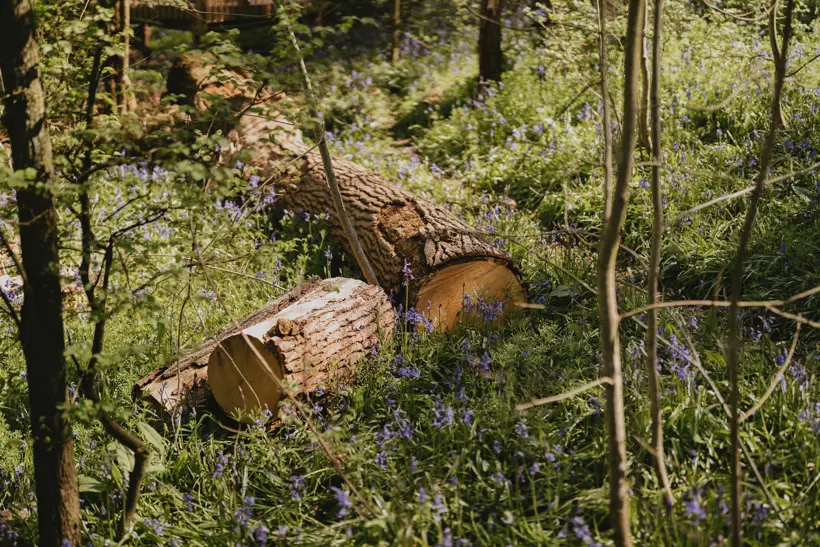
Nature. The retreat lives outdoors as much as indoors. Silence, walking, sitting with your back against an old tree. For men who live in cities and inboxes, this lowers the inner and outer noise far enough that they can finally hear themselves.
Rest and unstructured time. Meals together, coffee, laughter. Some of the most important moments happen between the sessions, not in them. One man told me his biggest shift came at breakfast.
The men who come describe what it feels like better than I can.
Adam arrived after months where his life was, in his words, falling apart: "I was asking a lot of questions. Why is this happening? Am I not worthy? I just wanted to get some answers, and I wanted to reignite my trust and love for life."
Eliott came, as he put it, "to release all my frustration, my anger, my sadness, and to really become the man that I wanted to become."
And Phil, a father in his forties, said this: "There's a numbness that comes over time as you grow older. I was just looking to be able to appreciate the day-to-day moments again."
Different men, different reasons why they came. The same patterns underneath: something real has been shut away for years, and it needs a place that is both safe and strong enough to come out.
A men's retreat is only as good as its container. These are the principles I follow, and the ones you should demand from any retreat you consider:
Everything is an invitation. No man is ever forced or pressured into any practice. You can sit anything out, and sometimes participants do sit out.
Confidentiality. What happens in the retreat stays in the retreat.
An application process. A serious retreat asks about your health, your history, what's challenging you, and what you really want before accepting you. If a retreat takes anyone with a credit card, walk away.
Trained facilitation. Deep feelings surface at a retreat. The people facilitating the retreat need real training, not just charisma. Ask any facilitator what their training is. I hold an MA in Psychosynthesis Psychology, am an accredited shamanic practitioner, and have guided more than a thousand men and women through this work. My co-facilitator Arun holds an MSc in Occupational Psychology. You are allowed to ask for that, and you should.
Real modelling. A facilitator has to embody what he teaches, and share only from experience he has actually lived and knowledge he has actually earned. If a man facilitating the retreat is not doing his own work, a part of you will know. Why would you follow someone who wouldn't be willing to go first?
Walking with, not in front. Arun and I do the work alongside the men. We share openly what comes up for us during the retreat. We are part of the process, human together with everyone there. There is no guru seat, and nobody sits above anyone pretending to have it all figured out.
No dogma. A men's retreat is not a political stance and it is not anti-women. We are not attached to any religion. The practices we use are ones we know from our own lives, tested over thousands of years, and combined with modern depth psychology. The men who come want to be better husbands, fathers, sons, uncles, friends, partners and leaders.
It is for men who feel that something in their everyday life is not quite right. Men who are outwardly successful and still feel something is missing, or "this is not it". Men carrying frustration, heaviness or numbness they cannot put anywhere. Men who want other men around them who are real.
It is not for everyone. Samer put the condition simply: it works for "people who admit that they have something going on, that they want to grow, that they want to evolve. If they don't have that mindset, this will fly by."
If you are looking for a holiday, book a holiday. And if you are in an acute crisis, be honest about it in your application. A responsible facilitator will tell you honestly whether a retreat is the right container for you right now, and help you find what is.
Four or five days can open a door. Living differently is what happens in the months after, and a retreat that ends at the closing circle has done half the job.
At The Return of Men, every man joins a preparation call before we gather, and three integration calls in the weeks after. The group stays connected. Three months on, Patryk sent me a voice note saying the biggest change was "the empathy that I have for myself, and for people around me". That is what integration looks like. It's rarely fireworks. It's more often a changed baseline.
What happens at a men's retreat is not mysterious. Men slow down, drop the ways they have been performing, feel what they have been carrying, discover their truth and their next steps, and are witnessed by other men while they do it. The practices open the door. Being met and held accountable by other men as you walk through it is what makes the change last.
Oliver, the man this article opened with, said the retreat "gave me the answers I was searching for, in places that I didn't expect to find them". Phil left saying he would recommend it to any man "who wants to remember how fucking amazing life is".
If something in you has been curious about men's work for a while, that is worth listening to.
The Return of Men runs 12 to 16 May 2027 at BioVilla, near Lisbon, Portugal. Read about it here. If it speaks to you, leave your email or fill out the application, then we'll schedule a call with you. On the call, we'll get clearer on where you are, where you want to be, and whether this is the right experience for you.
And if you want to see rather than be told, the record of past retreats is public: the films, the photographs and the men's own words from 2024, 2025 and 2026.
A small group of men spend several days together in nature, combining honest group circles with body-based practices such as breathwork, cold water, movement and ceremony. Nothing is forced; every practice is an invitation. The aim is to let men drop the roles they perform elsewhere and be honest with other men, often for the first time.
A good retreat is the opposite of a cult: full consent, no dogma, no dependency on a leader, and a clear application process. Warning signs are pressure to join, no application process, no straight answer about the kinds of practices used or who is holding them, or a facilitator with no training. Ask direct questions before booking. A serious facilitator will welcome them.
No. Every circle is an invitation. Some men speak at length, others say little, and both are respected. Most men find that hearing another man go first changes everything: "If he can share what he has been so afraid of sharing for so long, I can share too."
Come rested, answer the application honestly, and set the practical parts of life to run without you for a few days. Eliott's advice after his first retreat: come without expectations, but come with a clear motivation to embrace it fully.
It complements therapy but does not replace it. A retreat works with the group and the body over a few intense days; therapy works one-to-one over time. Many men do both. If you are in acute crisis, one-to-one professional care comes first, and a responsible facilitator will tell you that plainly during the application process.
Serious retreats are deliberately small, usually between 12 and 24 men, so each man is seen and the circle stays real. The Return of Men caps at 22 men in Portugal and 24 in the UK, each with two facilitators and a support team.
Read the latest insights and stories on the power of psychedelic-assisted therapy and holistic personal development for leaders and entrepreneurs.